If you’ve ever sat beside a large body of still water and noticed how quickly your thinking slows down, that experience scales up. Europe’s best lakes aren’t just scenic stops – they’re places with enough depth, literally and otherwise, to hold your attention for days.
Central Europe’s Quiet Alternative
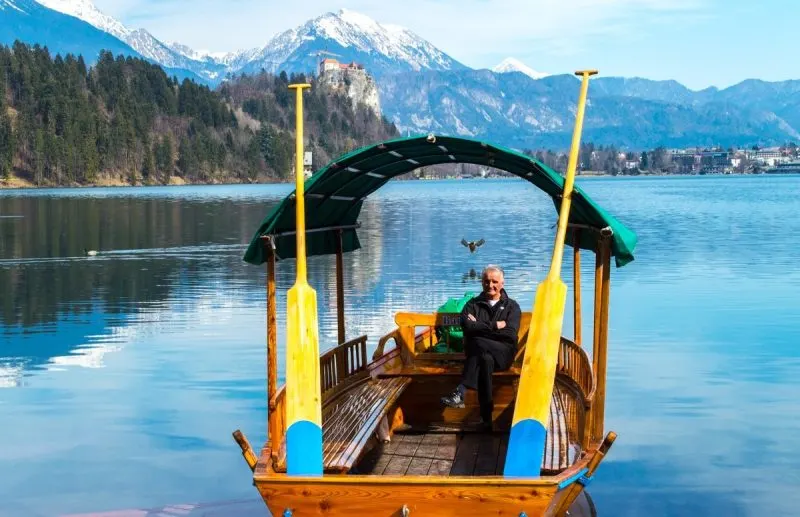
Lake Bled in Slovenia is small by European standards – 2.1 kilometres long – but its proportions work in its favour. The medieval castle above the western shore, the island church in the middle of the lake, and the Julian Alps rising behind the northern shore create a composition so tightly arranged it looks slightly unreal in photographs. The famous Bled cream cake, a custard-and-cream pastry sold at the Park Hotel since 1953, is not a tourist gimmick; it’s genuinely good and worth sitting down for. The lake circuit on foot takes around two hours and passes the source of the Radovna river, several swimming spots, and the boathouse where the traditional flat-bottomed pletna boats are built and maintained.
For a longer itinerary in the region, Lake Bohinj sits 30 kilometres further into the mountains and receives a fraction of Bled’s visitors. It’s larger, wilder, and sits inside Triglav National Park, which means development along its shores has been limited. The village of Ribčev Laz at the eastern end is the main access point, but the lake stretches west through increasingly remote terrain toward the Savica waterfall, an 80-metre cascade fed by an underground karst spring. Anyone travelling further into central Europe by rail – particularly those considering the Prague to Vienna train as part of a broader loop – will find that Slovenia sits naturally on a route that takes in multiple lake districts and mountain landscapes without requiring any backtracking.

Scotland’s Inland Water
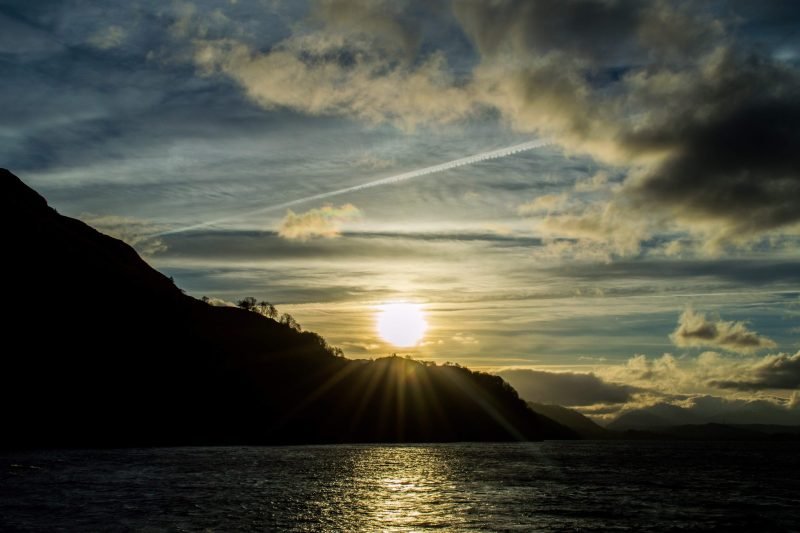
Loch Ness is the most famous of Scotland’s lochs and also the one most frequently dismissed by people who feel the monster legend has overwhelmed whatever genuine character the place might have. It is worth separating the two. The loch is 23 miles long, over 750 feet deep, and contains more water than all the lakes in England and Wales combined. That scale makes itself felt from the banks in a way that photographs do not capture particularly well. The road along the southern shore, the B862 between Fort Augustus and Inverness, runs higher above the water than the more-visited northern road and gives you the full length of the loch laid out below you on clear days.
Loch Lomond is a more manageable proposition and better placed for access from Glasgow, which is 30 minutes away by train. The loch sits on the Highland Boundary Fault, so the southern end is gently rolling lowland and the northern end is Highland in character – narrow, deep, and ringed by summits. The village of Luss on the western shore is small and tends to be crowded in summer, but the less-visited eastern shore, accessible via Balmaha, offers quieter walking and the chance to take a small boat to some of the 30-odd islands in the loch. For visitors combining Scotland with England, the train from London to Edinburgh puts you at a useful starting point; from Edinburgh it’s a straightforward connection to either Glasgow for Loch Lomond or north toward Inverness and Loch Ness.
Where the Water Earns Its Reputation
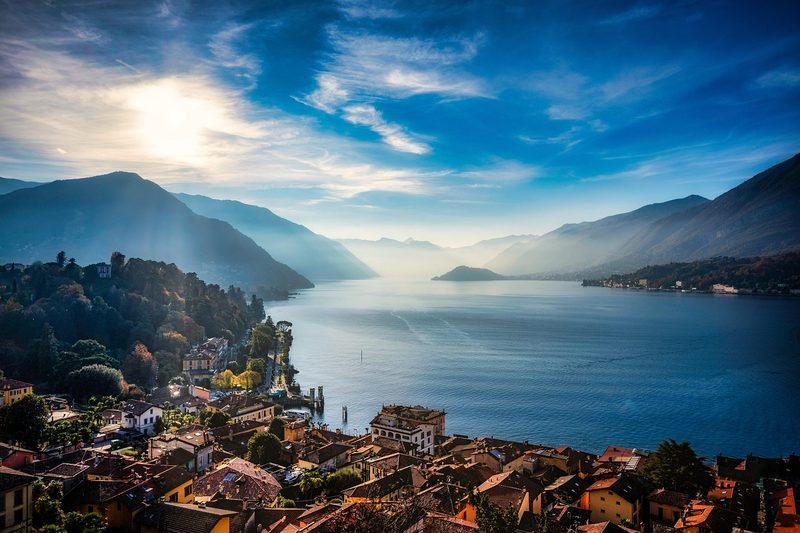
Lake Como in northern Italy has been written off as too expensive and too crowded by enough people that the criticism has almost become a cliché in itself. Both things are true in the peak summer months at the main towns, particularly Bellagio and Varenna. But the lake is large enough and shaped awkwardly enough – it branches into two arms and runs north to south for 46 kilometres – that escape from the crowds requires only modest effort. The western shore between Menaggio and Gravedona receives fewer visitors than the eastern arm and has a slightly rougher quality: smaller villages, less manicured waterfront, better views up to the Larian Triangle mountains above. Ferries cross the lake regularly and are the logical way to move between settlements; the road around the western shore is narrow enough to discourage anything resembling a leisurely drive.
The lake’s appeal is also climatic. The Lombardy prealps wrap around the northern end and trap Mediterranean air, creating a microclimate that allows lemon trees, camellias, and olive groves to thrive at latitudes where you’d expect something colder. Villa del Balbianello, on a promontory near Lenno, has gardens that run down to the water and the interior is well worth the entry fee for what it reveals about how northern Italian aristocratic taste operated in the 18th century. Less visited is the Abbazia di Piona, a Cistercian monastery on the eastern shore near the northern end of the lake, which has been in continuous occupation since the 11th century and sells honey and liqueur made on the premises.
A Lake That Straddles Borders
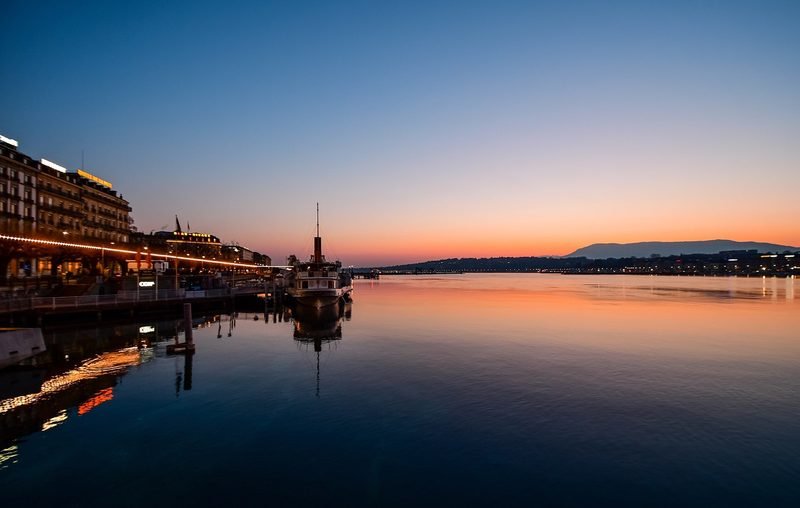
Lake Geneva – known in French as Lac Léman – sits between Switzerland and France and is the largest alpine lake in Western Europe. The Swiss side is heavily developed in the most polished sense: Geneva, Lausanne, and Montreux each occupy the northern shore and the infrastructure connecting them is immaculate. The train from Lausanne to Montreux runs directly along the lakefront and the views across the water to the French Alps are the kind that make people miss their stops. The French side of the lake is less visited and less pressured: Évian-les-Bains is known primarily for its mineral water but is a quiet spa town with direct ferry connections to Lausanne, and Yvoire, a medieval village on the southern shore, has retained its walls and towers without becoming entirely a tourist set piece.
The Lavaux vineyard terraces above Vevey and Lausanne are a UNESCO World Heritage site that most people who know Lake Geneva by reputation have never visited. The terraces drop steeply to the lakeshore and have been cultivated since the 11th century; the Chasselas grape grown here produces wines that are barely exported and mostly drunk locally, which gives visiting them a sense of arriving at something genuinely regional rather than globally marketed. The Walk of Flame, a wine route through the Lavaux, passes through the villages of Rivaz, Saint-Saphorin, and Chexbres and can be walked in an afternoon with no great exertion, though stopping to taste at the co-operatives along the route makes it considerably longer.
Southern Spain’s Hidden Water
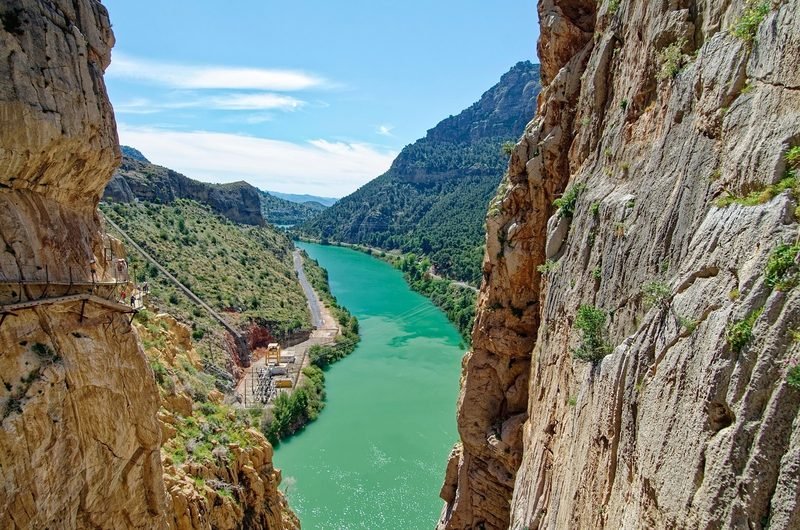
The Caminito del Rey in the El Chorro gorge in Andalusia is primarily known for its cliff path, but the Guadalhorce reservoirs it passes above are the reason the landscape exists at all. The three artificial lakes – Guadalhorce, Guadalteba, and Conde de Guadalhorce – were created in the 1920s and 1940s, and the intervening century has given their shores time to settle into something that no longer feels built. The rocky limestone country above them dries to pale gold in summer and the water stays a deep blue-green that contrasts sharply with the parched surroundings. The town of Ardales above the largest reservoir has remained a working agricultural village rather than a lake resort, which makes it a more honest base than many comparable spots.
Further south, the Embalse de Zahara-El Gastor in the Sierra de Grazalema natural park is less known than El Chorro but arguably more satisfying. The white village of Zahara de la Sierra sits on a ridge above the reservoir with a castle above it – a layered profile familiar from many Andalusian hill towns, but here the lake adds a dimension that the landlocked versions lack. The natural park around it is one of the wettest areas in Spain, which sounds counterintuitive in Andalusia but produces a lush interior of forests, rivers, and walking routes that operate at a pace entirely removed from the coastal strip 70 kilometres to the south.
Conclusion
Europe’s lakes don’t offer the same thing. Some are about scale, some are about precision of setting, some are about the life that has built up around them over centuries. What they share is the quality of water itself – reflective, heavy, patient – which tends to produce a particular kind of attention in the people who sit beside it long enough. Pick one, give it more days than you think it needs, and see what happens.