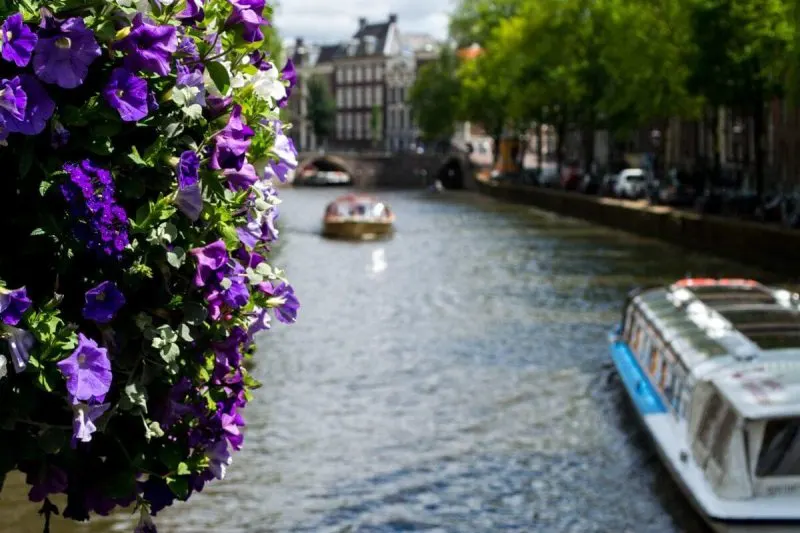
What does a river cruise actually give you that a train journey doesn’t? The answer is pace – a pace slow enough to watch a riverbank change over hours rather than minutes, and a vantage point low enough to feel like you’re inside the landscape rather than passing through it.
The Douro Valley by Water
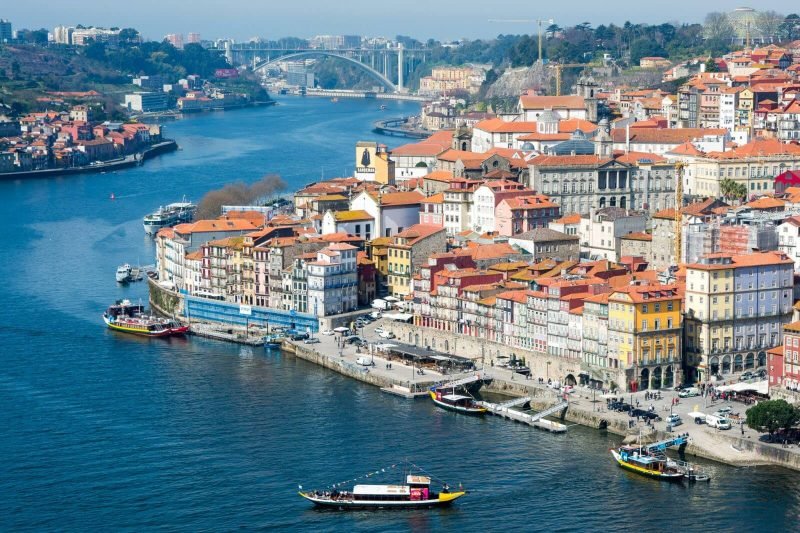
Douro cruises in Portugal cover a stretch of river that looks extraordinary from any angle, but the view from the water adds a dimension that the road along the valley ridge doesn’t offer. The valley sides rise steeply on both sides, the terraces stack upward in layers that disappear into the sky, and the river itself is mirror-calm in the early morning before any wind arrives. Most itineraries begin in Porto, which gives you a day in the city before departure – time enough to cover the riverfront Ribeira district, cross to Gaia to visit a port wine lodge, and walk up to the viewpoint at Serra do Pilar for the view back across the Douro toward the city.
Upstream from Porto, the landscape transitions gradually from coastal Portugal to the dry, rocky plateau of the Trás-os-Montes. The quintas – wine estates – along the valley welcome cruise passengers for tastings, and the quality variation between them is significant enough to make this genuinely interesting rather than purely ceremonial.
Pinhão is the furthest point most cruises reach and marks the centre of the Port wine-producing region; the train station there, with its azulejo tile panels, is worth the short walk from the dock. For those considering extending their trip southward after the cruise, the Lisbon to Faro train makes a sensible connection to the Algarve, covering the full length of Portugal by rail and giving a sense of how dramatically the landscape changes from north to south.

UK Rivers Worth Sailing
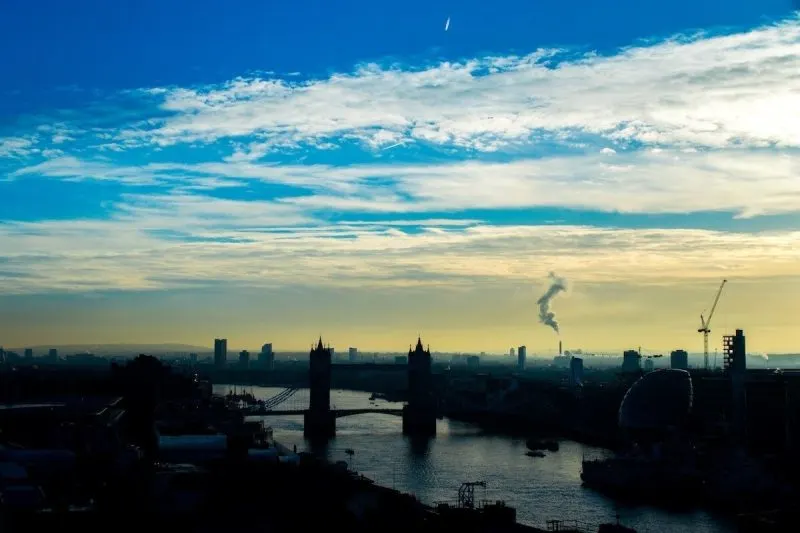
Britain’s rivers don’t get much attention in the river cruise conversation, which is partly a matter of scale – nothing here approaches the length or drama of the Danube – and partly a matter of expectation. But the Thames, the Caledonian Canal corridor in Scotland, and the Norfolk Broads each offer something that larger international itineraries can’t replicate: a version of the landscape that moves slowly enough to notice the details. Thames river cruises running between Oxford and London pass through lock-managed stretches of water that have barely changed in their organisation since the 18th century. The towns along the route – Abingdon, Wallingford, Henley, Marlow – announce themselves gradually from the water, and the shift between rural water meadows and the dense London riverscape is one of the more dramatic transitions on any UK journey.
Scotland’s Caledonian Canal connects the west coast at Corpach near Fort William to Inverness on the east, running for 60 miles through a chain of lochs including Loch Ness and Loch Lochy. The canal was engineered by Thomas Telford and opened in 1822; it crosses the Great Glen fault line and passes through some of the most remote terrain accessible by water in Britain. Cruising the full length takes around four days and the infrastructure – 29 locks, 10 bridges – is a reminder that this was built as a working navigation, not a scenic attraction.
The approach to Inverness at the northern end makes a natural starting point for the Scottish Highlands more broadly, and visitors arriving independently from the south will find the train from London to Edinburgh a practical first leg before continuing north by rail to reach Fort William or Inverness. The combination of the canal by water and the Highland main line by rail covers a substantial section of Scotland without ever needing a car.
The Norfolk Broads are a different proposition entirely – a network of navigable rivers and shallow lakes in East Anglia, created by medieval peat extraction and now forming the largest protected wetland in Britain. Hire boats are the standard format here rather than organised cruises, and the autonomy of navigating at your own pace through reed-lined channels and past windmills that have been there since the 17th century gives the experience a character that no guide can fully replicate.
The Broads are tidal in their southern sections, which means timing the tides matters and adds a practical engagement with the landscape that most inland waterways don’t require. Potter Heigham, Wroxham, and Horning are the main hire centres, and a week on the water is enough to cover the main waterways without feeling rushed.

Cruising the Danube
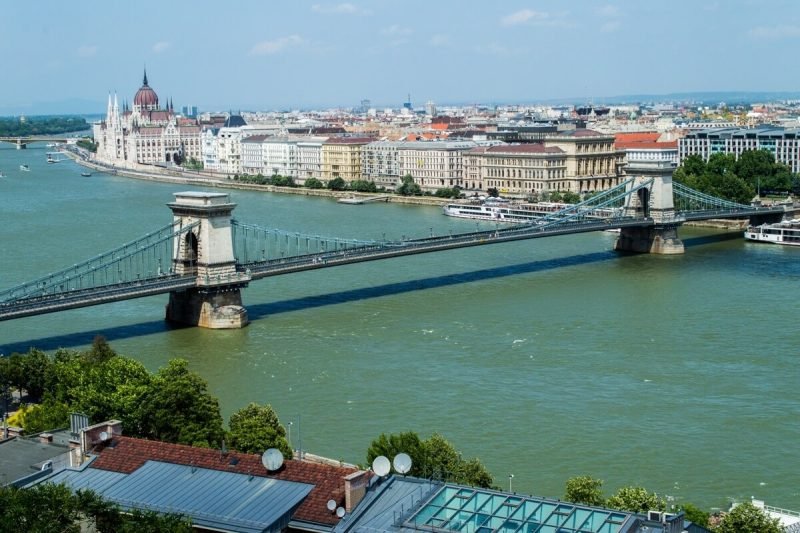
The Danube river cruise market is large and well-established, which has its advantages and drawbacks. The advantage is that the infrastructure works: there are good options at multiple price points, the ports of call are well-organised, and the routes are refined enough to cover the most rewarding sections efficiently. The drawback is that the major operators run similar itineraries, and the stretch between Passau and Budapest can feel choreographed on the larger ships.
The answer to this is either to book a smaller vessel – several operators run boats with fewer than 50 passengers – or to focus on shoulder-season sailings in March, October, or November, when the itinerary is the same but the light, the crowds, and the sense of the river belonging to you shifts considerably.
The section through the Wachau Valley in Lower Austria is the centrepiece of most Danube cruises and earns its reputation. Vineyard terraces rise from the right bank, apricot orchards fill the valley floor in spring, and the medieval towns of Melk, Dürnstein, and Krems appear at intervals above the water.
Most cruise itineraries allow a few hours in each; the more useful approach is to treat one of them as a base for a night or two before or after the cruise itself. Dürnstein, with its ruined castle and one excellent restaurant in the main street, is the most manageable for this. The Danube then opens out as it approaches Vienna, and arriving in the city by water – even via the practical entrance through the Danube Canal – is a different experience from arriving by train or air.
The Rhine Between Basel and Amsterdam
Rhine cruises cover more ground than almost any other European river itinerary – the full run from Basel to Amsterdam passes through Switzerland, Germany, France, and the Netherlands, and the landscape shifts character enough times to feel like several different trips stitched together. Most operators run the route in around seven days, moving downstream so the current assists the pace. Basel makes a strong starting point in itself: the city sits at the junction of three countries, has a serious museum culture, and the Rhine here is fast and cold enough that locals swim across it in summer using dry bags as floats, which tells you something about how the city relates to its river.
The gorge section through the Upper Middle Rhine Valley between Bingen and Koblenz is where the cruise earns its reputation. The river narrows, the valley sides steepen, and the density of castles on the ridges above – over 40 of them within 65 kilometres – produces a landscape that would look improbable if you encountered it in a painting.
The Loreley rock at the tightest point of the gorge is 132 metres of slate cliff with centuries of mythology attached; what matters on the water is less the legend than the way the current quickens there and the cliffs press close on both banks. Rüdesheim and Bacharach are the most visited towns along this stretch, and both reward at least a short stop – Bacharach in particular has kept more of its medieval structure than most comparable Rhine towns.
North of Koblenz the river widens and the drama softens. Cologne appears with its cathedral visible from the water well before the city itself comes into focus, and the transition from the gorge landscape to the flatter Rhine plain happens gradually enough to notice.
The final stretch into the Netherlands is a different world entirely – the river spreads into a delta, the land flattens to the horizon, and the engineering that keeps the water in its channels becomes visible everywhere. Arriving in Amsterdam by river, via the Rhine-Schelde canal network, puts the city’s entire logic into perspective: it was built on water and it still organises itself around it.
Conclusion
River cruising works because rivers are already a form of narration – they have a beginning, a direction, and somewhere they’re going. Travelling to one place puts you inside that logic rather than cutting across it. Whether it’s a polished Danube itinerary or a hired narrowboat on the Norfolk Broads, the water does the work of orienting you. Everything else follows from that.