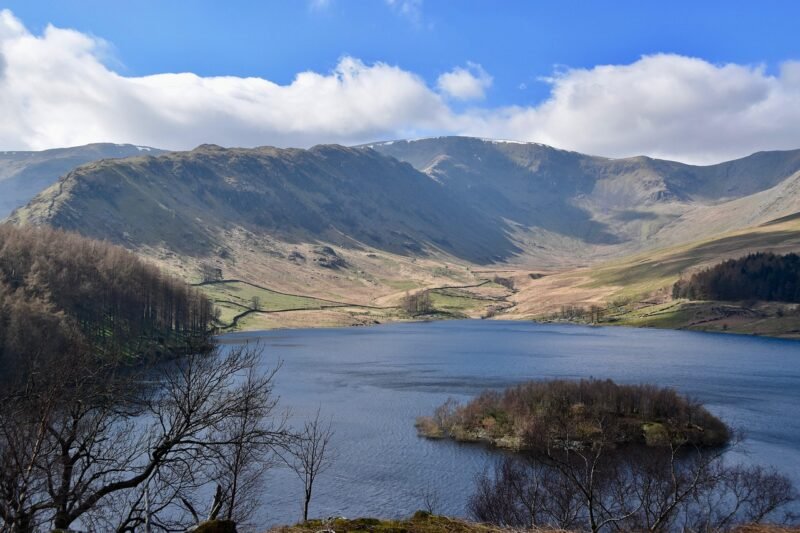
The UK has a way of making you feel watched. Not in an unsettling sense – more like the land itself is paying attention, old and patient in a way that most places aren’t. These are the spots that stay with you after you leave.
The Scottish Highlands
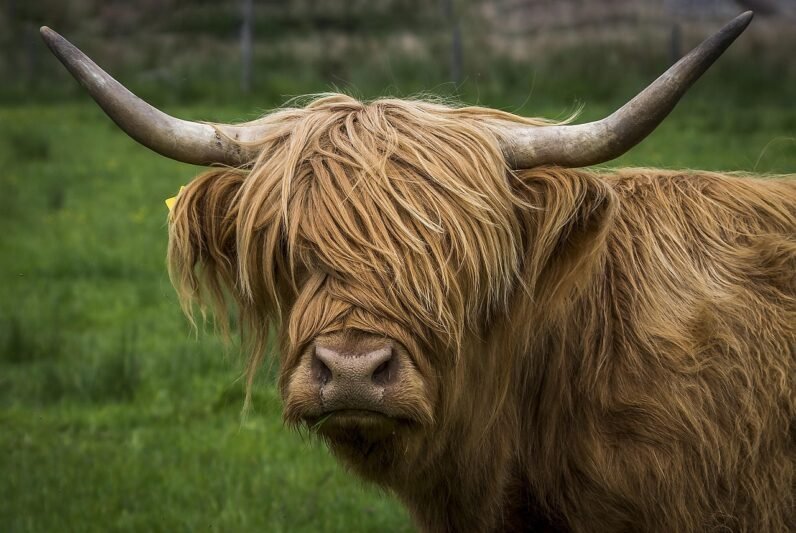
Few places in Europe make you feel as small as the Scottish Highlands, and that’s precisely the point. The scale here isn’t aggressive – it settles over you slowly, as you realise the loch in the distance is further than you thought, and the ridge you’ve been walking toward for an hour has barely shifted. Glen Coe is the obvious starting point, a valley carved so dramatically it looks almost implausible from the road. The peaks crowd in close, and on overcast days, the light drops differently on each slope, so the landscape seems to shift without moving. Rannoch Moor sits just east of Glen Coe and offers something harder to photograph but easier to feel: an almost total absence of anything built. The bog stretches out in every direction, interrupted only by the weather. Most visitors pass through on the way somewhere else, which is a mistake.
The train journey into the Highlands is worth treating as a destination in itself. The West Highland Line runs from Glasgow to Mallaig and crosses some of the most remote stretches of mainland Britain, including the Glenfinnan Viaduct – familiar now from film, but still affecting in person. If you’re arriving from further south, the London to Edinburgh train is a practical first leg, and from Edinburgh you’re well-placed to push north by rail or road. The Highlands reward slow travel, and rushing through to reach a checklist of viewpoints misses what makes the region worth visiting in the first place.
The Causeway Coast
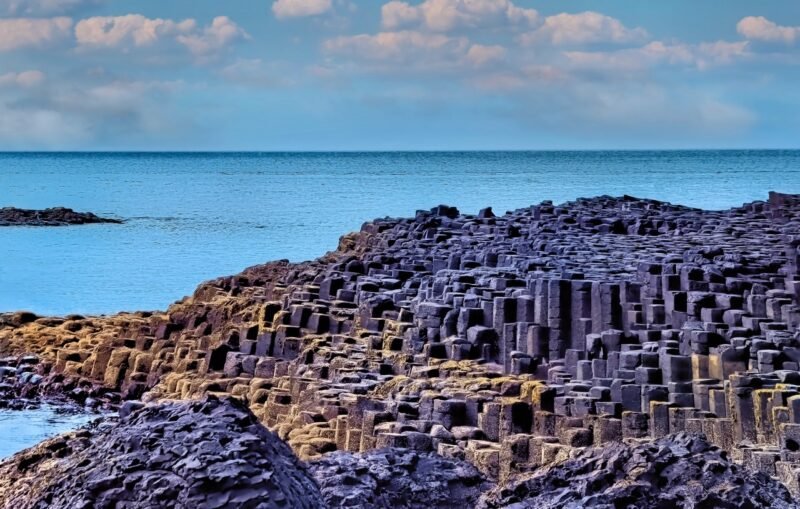
Northern Ireland’s Causeway Coast covers around 33 miles between Portstewart and Ballycastle, and it packs in more variety than most coastal routes twice its length. The Giant’s Causeway itself is the reason most people come – around 40,000 interlocking basalt columns that descend to the sea in a formation that genuinely defies easy explanation. The hexagonal columns were formed around 60 million years ago by volcanic activity, and the precision of their geometry, which looks almost engineered, is the result of how the lava cooled and contracted. The site is busy in summer, and the visitor centre is a bit much, but arriving early in the morning changes things considerably. The crowds arrive around 10 am; before that, the columns are mostly yours.
The wider Causeway Coast includes Carrick-a-Rede rope bridge, a cable crossing to a small island used historically by salmon fishermen, and the ruins of Dunluce Castle, which sits on a basalt outcrop above the sea and looks like it was placed there to be painted. For anyone considering extending their trip into the Republic, Ireland tours that cover both the north coast and the Wild Atlantic Way in one itinerary make sense geographically – the Atlantic coastline continues south with the same dramatic quality, though the light and the rock change as you go. The Causeway Coast is easy to drive in a day, but a longer stay in one of the small towns along the route gives you access to the landscape at different times of day and in different weather, which is when it’s at its most interesting.
The Jurassic Coast
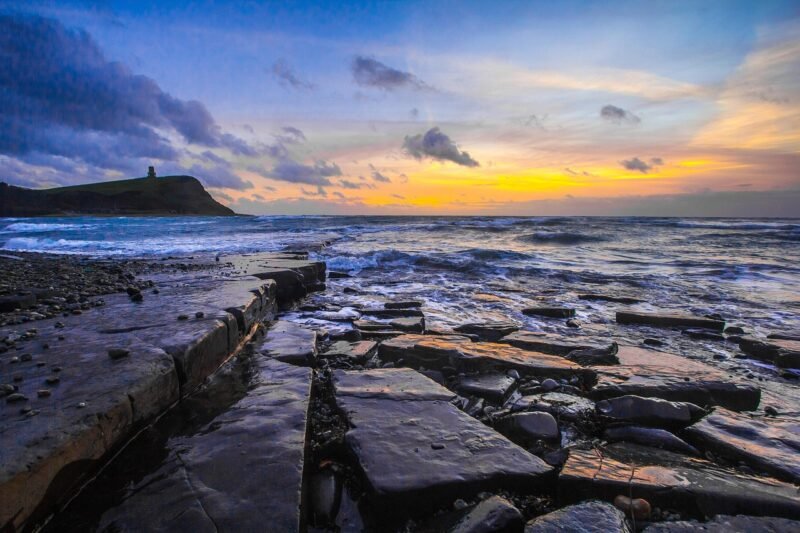
England’s Jurassic Coast runs for 95 miles along the Dorset and Devon shorelines, and it’s the kind of place where you notice how quickly the light changes over the sea. The cliffs here aren’t uniformly dramatic – they vary from chalk white to deep rust-red depending on where you are – and that variety is what makes a full day’s walk along the South West Coast Path feel genuinely interesting rather than repetitive. Durdle Door is the most photographed point, an arch of Portland limestone that juts into the water with the kind of geometric confidence that makes people stop walking. Old Harry Rocks, at the eastern end, mark the point where the Jurassic Coast meets the chalk that continues underwater toward the Isle of Wight.
What draws people back to this stretch of coastline isn’t the individual landmarks, though they’re worth seeing. It’s the pace the landscape imposes on you. The path climbs and drops constantly, and you end up taking breaks not because you’ve planned to but because the view demands it. Chapman’s Pool is a good example – a small cove that most visitors skip because there’s no car park nearby, which means you’ll likely have it to yourself. The geology is also unexpectedly accessible here; the cliffs shed fossils regularly, and you don’t need any specialist knowledge to find them on the beach at Charmouth.
The Brecon Beacons
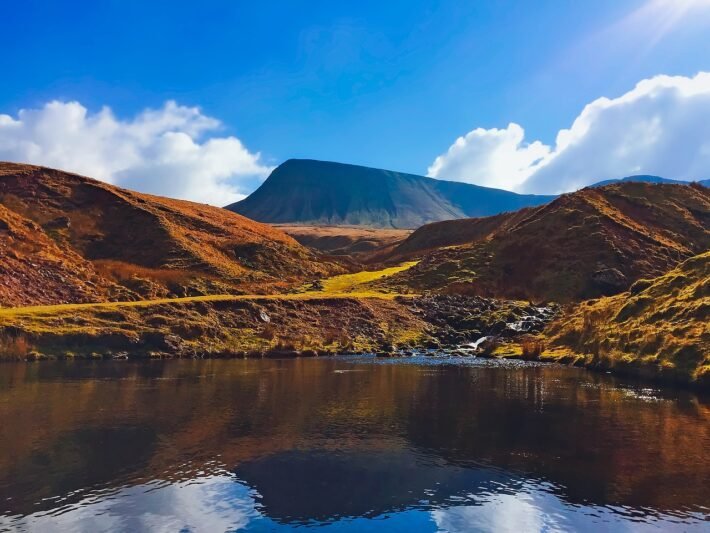
Wales has no shortage of landscapes that resist easy description, and the Brecon Beacons sit somewhere between moorland and mountain without fully committing to either. The Beacons’ high points – Pen y Fan and Corn Du – are accessible enough to attract large numbers of walkers, particularly on summer weekends. But the range stretches far enough that solitude is always within reach if you’re willing to go slightly off the main paths. The Waterfall Country in the west of the park is genuinely undervisited relative to how good it is. A network of rivers drops through a series of falls at Ystradfellte, and the paths thread between them through dense woodland in a way that feels nothing like the open moorland most people associate with the Beacons.
The Black Mountains in the east of the park have a different character – long, flat-topped ridges that run roughly north to south, with deep valleys between them. Walking the Offa’s Dyke Path here puts you on the border between Wales and England, often quite literally. The small market town of Hay-on-Wye makes a good base and is worth time in itself, known for its concentration of secondhand bookshops and an annual literary festival that draws writers from across the world. The Beacons are dark-sky certified, and on clear nights the absence of light pollution is striking – another reason to stay overnight rather than visiting as a day trip.
Dartmoor
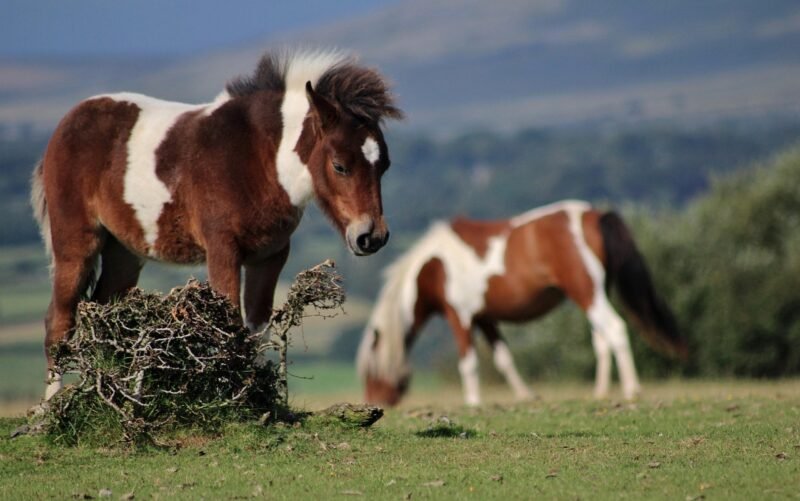
Dartmoor is one of those places that divides people cleanly into those who find it bleak and those who find it free. The national park covers around 368 square miles of upland moorland in Devon, defined by its granite tors – rock formations that rise above the bog and heather in shapes that seem purposeful from a distance. Haytor is the most accessible and consequently the busiest; Hound Tor and Bowerman’s Nose are less visited and no less interesting. The moor has been inhabited for thousands of years, and the landscape is full of Bronze Age remains – stone rows, burial chambers, enclosures – distributed across the open ground with no paths leading to them. Finding them requires a map and some patience, both of which the place teaches you.
The weather on Dartmoor changes fast, and this is worth taking seriously rather than treating as a travel disclaimer. Fog arrives without warning, and the paths disappear quickly. That unpredictability is also what makes the moor feel alive in a way that manicured landscapes don’t. Princetown sits near the middle of the moor and is the highest town in England; it’s a useful base and less grim than its association with the nearby prison suggests. The East Dart and West Dart rivers run off the high moor and meet at Dartmeet, and the river valleys are sheltered and wooded in contrast to the exposed upland – another dimension to a landscape that rewards more than a single visit.
Lake District
The Lake District became England’s largest national park in 2016 and its concentration of lakes, fells, and valleys within a relatively small area makes it the most visited of the UK’s national parks. Windermere is the largest natural lake in England and the obvious entry point, but familiarity has made the southern end of it quite crowded in peak season. Ullswater, in the east of the park, is quieter and arguably more scenic – the lake curves around a headland so that the view changes completely as you move along its shore. Steamer services run the length of it and connect the villages at each end.
The fells above Grasmere and Ambleside offer some of the most accessible high-level walking in England, and the views from Helvellyn and the Langdale Pikes on clear days are the kind of thing that makes people relocate. The Lake District’s association with Wordsworth and the other Romantics isn’t just literary tourism; the poets who wrote about this landscape were responding to something specific about the way it sits on you, and that quality hasn’t changed. Dove Cottage in Grasmere, where Wordsworth lived and wrote, is small and modest and worth visiting for exactly that reason.
Conclusion
The UK’s wild landscapes don’t ask much of you except attention and a willingness to be somewhere that operates on its own schedule. From the Causeway Coast to the high moor, each of these places has a character that photographs only partially capture. Go in shoulder season if you can, give yourself more time than you think you need, and resist the instinct to see everything. The landscapes that stay with you tend to be the ones you sat with long enough to actually notice.